
History and Foundation
Founded in 1889 by French immigrant Francisco Laur, this estate in the Cruz de Piedra area was a pioneer in planting olive groves and producing olive oil in Mendoza. In the 2010s, the company was acquired by the Millán Family (also owners of Los Toneles Winery), who modernized the plant, recovered the century-old olive trees, and inaugurated Argentina’s first and only acetaia that crafts balsamic vinegar in the traditional Modena style.
Architectural Details
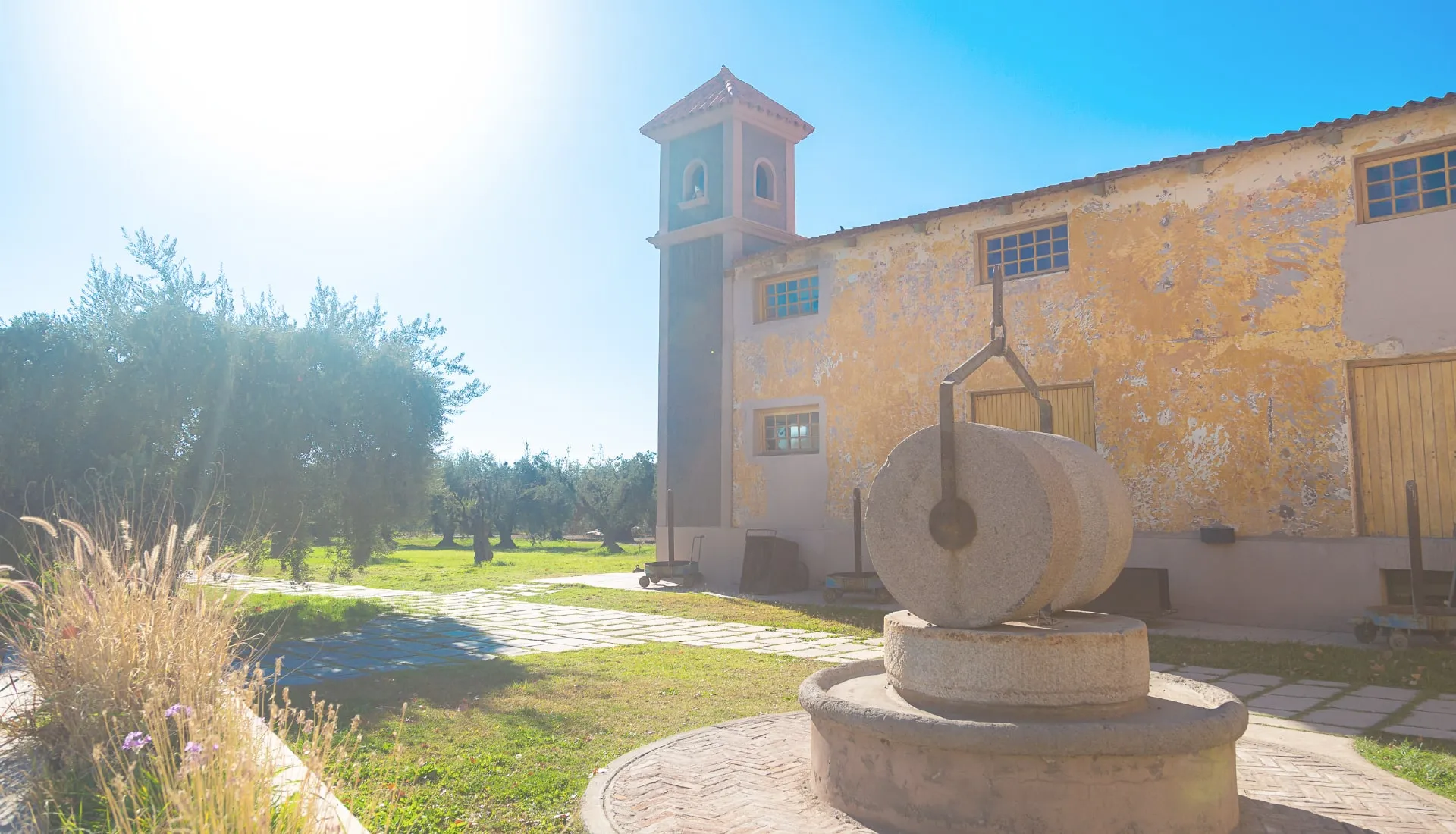
The property is a beautiful contrast between history and technology. On the one hand, it preserves its original hall with the old stone presses, which today function as an open museum. On the other hand, it houses state-of-the-art continuous extraction machinery of Italian origin. A few meters away is the Acetaia, a building that jealously guards rows of barrels made of different woods (oak, cherry, chestnut) where the balsamic vinegar ages for years.
What to expect on a visit?
A visit to Laur is a fascinating sensory journey and an excellent complement to the wine circuit. Guides take visitors to walk among protected century-old olive trees, show the evolution of the extraction machinery, and explain the meticulous aging process of the balsamic vinegar. The experience culminates with a guided tasting, where you can sample different extra virgin olive oils, olive pastes, and their award-winning balsamic vinegars.
Their Products
Laur is the pinnacle of extra virgin olive oil (EVOO) in Argentina. They produce blends and varietals (such as Arauco, the flagship Argentine olive variety). Their Acetaia crafts balsamic vinegars that age for at least 15 years, achieving a thick, sweet and sour product of extraordinary complexity, far removed from common commercial balsamic vinegar.
Fun Facts
- Laur Olive Oil Mill made history by establishing itself as the Best Olive Oil Mill in the World, reaching the number 1 spot in the EVOO World Ranking consecutively in recent years, surpassing historic producers from Spain, Italy, and Greece.
- They have Arauco variety olive trees that were planted at the end of the 19th century and have been declared Cultural and Provincial Heritage.