
History and Foundation
Founded in 1902 by Italian immigrant Nicola Catena, who planted his first Malbec vineyard convinced of the region’s potential. However, it was in the 1980s when his grandson, Nicolás Catena Zapata, revolutionized the local industry. After observing practices in California, he introduced modern techniques and pioneered planting vineyards at high altitudes (like the famous Adrianna vineyard in Gualtallary) to seek cooler climates, forever changing the paradigm of Argentine wine.
Architectural Details
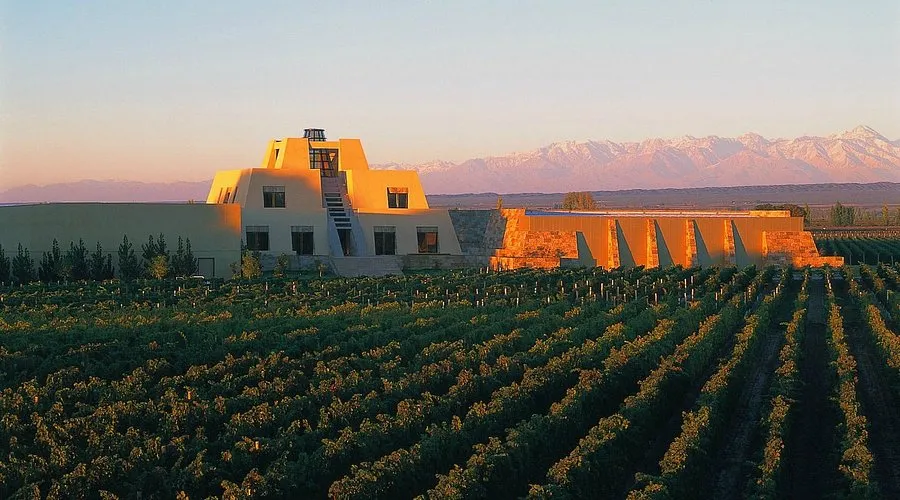
The main building is unmistakable and majestic: a tiered structure designed as a tribute to Mayan architecture. This pyramid, built with local stone, is not only an aesthetic landmark that stands out against the Andes Mountains, but it also symbolizes the deep connection between the land and the native cultures of the American continent.
What to expect on a visit?
Tours are highly exclusive and require booking well in advance. They offer a tour inside the pyramidal building and the imposing underground cellars, which stand out for their circular design and dim lighting. The experiences include tours through the barrel room and guided tastings of their high-end lines, where guides detail the influence of different microclimates and soil composition in every glass.
Their Wines
Catena Zapata is world-famous for its high-altitude Malbecs and Cabernet Sauvignons. Their scientific approach to studying the terroir through the Catena Institute of Wine has led them to produce wines with perfect scores (100 points) from international critics.
Fun Facts
- The Adrianna vineyard, located at almost 1,500 meters above sea level, is frequently cataloged by critics as the “Grand Cru of South America”.
- Nicolás Catena Zapata was the first South American to receive the prestigious “Decanter Man of the Year” award in 2009.